Gallic Empire Treasures: Over 40,000 Roman Coins Discovered in France
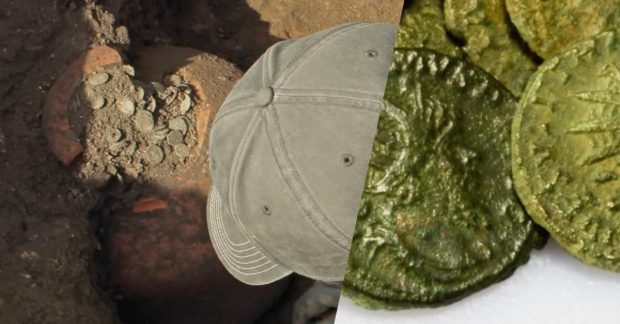
During house expansion in the French town of Senon, archaeologists unearthed massive coin hoards dating back 1,700 years.
 🎭Culture & Sport
Photo: UNIAN
Key points
- Over 40,000 Roman coins weighing more than 80 kg were found in Senon.
- The hoards date back to 280–310 AD and are linked to the Gallic Empire.
- The method of storage under the floor indicates active use of the currency as liquid capital.
In the French town of Senon, located in the Meuse department, a sensational archaeological discovery was made during a private house expansion. On a 1,500-square-meter site, researchers uncovered the remains of an ancient Roman settlement, including streets, residential buildings, and limestone quarries. However, the most significant find was three hidden caches containing over 40,000 copper coins.
Scale of Ancient Savings
The findings are impressive in their mass and weight. The first vessel contained between 23,000 and 24,000 coins, weighing approximately 38 kilograms. The second hoard was even heavier, weighing about 50 kilograms including the container, and holding between 18,000 and 19,000 units. The third cache was found nearly empty, with only three coins remaining, as most of the treasure had been removed in antiquity.
Experts date these hoards to the period between 280 and 310 AD. Among the artifacts, coins depicting the rulers of the so-called Gallic Empire — Victorinus, Tetricus I, and Tetricus II — were identified. This state existed on the territory of modern France and neighboring regions between 260 and 274 AD, confirming the age of the finds at over 1,700 years.
Ancient 'Banking System'
The method of storing the money is of particular interest. The vessels were placed in specific pits directly inside residential quarters. They were located close enough to the floor surface to allow owners easy access to the vessel's neck to deposit savings or withdraw necessary amounts. This suggests that the coins were in active circulation and used as everyday capital.
According to archaeologists, the residents of this quarter were relatively wealthy, likely artisans or merchants. This is evidenced not only by the monetary reserves but also by the architecture of the houses, which featured kilns and courtyards. This discovery provides a better understanding of the economic structure of provincial Gaul at the turn of the 3rd and 4th centuries.
Source UNIAN — unian.ua/science/glechiki-z-monetami-13568304.html ↗
Read next
 👥Society
Power outage schedules for November 24: details from energy providers
Ukrenergo is implementing planned power outages across Ukraine due to the aftermath of recent attacks on the energy infrastructure.
 👥Society
NATO Will Not Retreat to 1997 Borders: Mark Rutte Rejects Kremlin's Ultimatum
NATO Secretary General Mark Rutte stated at the Parliamentary Assembly in Berlin that Russia's demand to roll back the Alliance to its 1997 positions is unacceptable to a…
 💡Tech
Key icon on Android screen: what it means and how to manage it
The appearance of a key icon in the Android status bar often confuses users. We explain why this indicator appears and what it means for your digital security.
 🎓Education
Danish Government Plans Nationwide School Smartphone Ban Following Record Low PISA Scores
Denmark prepares legislation to ban smartphones in schools up to the 10th grade in response to historically poor student performance data.
 🇺🇦Ukraine
Kremlin's Renewed Nuclear Threats: Medvedev Outlines Conditions for WMD Use
Dmitry Medvedev has once again threatened a preemptive nuclear strike against Ukraine, attempting to justify the ongoing invasion through geopolitical narratives.
 🇺🇦Ukraine
EU Responds to Putin's Moscow Invitation, Prioritizing Multilateral Peace Talks
The European Commission acknowledges the invitation from Moscow but insists on a broad diplomatic format involving NATO and EU allies only after a ceasefire.